
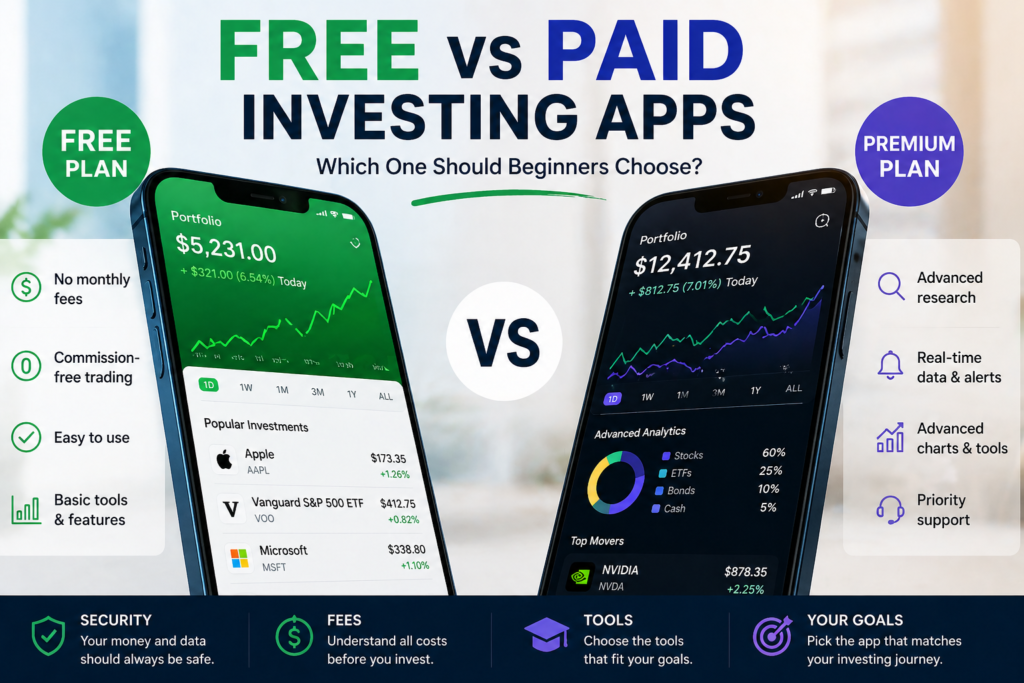
Picking an investing app can be really tough when you are just starting out. Some apps say they offer investing, no commissions when you trade and easy access to stocks or ETFs. Other apps have paid plans that come with tools, research, advanced charts, priority support or premium features.
When you first start you might think that free is always the choice. I mean, if you are new to investing why pay for an app when you do not even know what you are doing yet? That is a reasonable way to think about it. When you are just starting out you probably do not need tools or expensive subscriptions to learn.
Investing apps that are free are not always completely free. Some of them might have fees for things like spreads currency conversion or withdrawals that you do not notice at first. Paid investing apps can be useful too. Only if the extra features really help you make better investing decisions.
The thing is, it is not about whether free or paid investing apps are better. The better question is: which type of investing app is right for you and your investing needs now?
In this guide you will learn about the difference, between paid investing apps, what to look for when you are comparing them and how to pick one without spending too much money or missing out on important features.
What Does “Free Investing App” Actually Mean?
When we talk about a free investing app it usually means you can open an account and use the platform without having to pay a monthly subscription. You can also. Sell certain assets without paying a traditional commission, which is the fee that some apps charge for these services.
This is really great for people who are just starting out with investing. If you do not have a lot of money to invest paying fees can be annoying. A free investing app makes it easier for you to get started with investing.
However when we say that an investing app is free it does not always mean that there are no costs all. The free investing app may still make money in ways, such as by charging spreads between buy and sell prices, currency conversion fees, fund fees or by offering premium upgrades. The free investing app may also charge fees depending on how you use the platform.
This does not mean that free investing apps are bad. It just means that people who are new to investing should read the information about fees carefully of thinking that a free investing app means it will not cost them anything.
A good free investing app for beginners should be clear, about how it makes money and what fees users may have to pay for using the free investing app.
What Free Investing Apps Usually Offer
Free investing apps make it easy to start investing. They help you set up an account quickly track your portfolio and buy investments like stocks and ETFs.
For beginners these apps can be a starting point. You don’t need charts or professional data to get started. If you want to learn the basics and make long-term investments a free app can give you what you need.
Some free apps offer features like fractional shares, simple watchlists and educational content. These can help you start small and feel more confident.
The best part, about apps is that they are easy to access. You can start investing without paying for tools you don’t understand yet.
Free apps have some limitations. They might not have many research tools or their support might be slower. They may not offer many account types or advanced order options. Whether these limitations matter depends on how you like to invest.
What Paid Investing Apps Usually Offer
Free investing apps make it easy for people to start investing in things like stocks and ETFs. They help you set up an account quickly so you can track your portfolio. Buy investments.
For people who’re new to investing these apps are a good place to start. You do not need to know about charts or have data to get started with investing. If you want to learn the basics of investing and make long-term investments a free app can give you what you need to get started with investing.
Some free investing apps offer features like shares, simple watchlists and educational content to help you learn about investing. These features can help you start small with investing and feel more confident about investing.
The best thing about free investing apps is that they are easy to access. You can start investing without paying for tools you do not understand yet. You can use an investing app to learn about investing and then decide what you want to do.
Free investing apps have some limitations though. They might not have research tools or their support might be slower to respond to your questions about investing. They may not offer account types or advanced order options for investing. Whether these limitations matter to you depends on how you like to do your investing, with free investing apps.
The Hidden Costs Beginners Should Watch For
When you are using an app it does not matter if the app is free or if you have to pay for it. Beginners need to look out for costs that’re not immediately visible or are hard to notice.
One cost that people often miss is the spread. The spread is the difference between the price you pay to buy something and the price you get when you sell it. Even if you do not have to pay a commission the spread can still make a difference, in how money you make or lose.
Another cost you might have is when you change money from one currency to another. If your account uses one type of money. You buy things that are priced in a different type of money the people who run the platform might charge you a fee to change your money.
You might also have to pay to take your money out. If you do not use your account for a long time or if you move your account to a different place or if you use certain types of investments. For example ETFs can have their costs that you have to pay even if the app you use does not charge you to buy or sell things.
That is why beginners should not just look at whether an app’s free or not. An app that does not charge you every month might still end up costing you than you thought depending on how you use the app.
Before you pick an app you should carefully read the part that talks about all the fees. Review the fee page to understand what you might have to pay for when you use the investment app.
When a Free App May Be Enough
If you are new to investing and you have an investing plan a free investing app may be all you need.
For instance if you want to invest a money buy some ETFs and learn the basics of investing a free app is a good place to start with your investing plan and your investing goals. You do not need to pay for research tools to make your first long term investment with your investing plan.
Free investing apps are also helpful for people who are just starting out with their investing plan and are still getting used to things. You can figure out how the app works learn about the kinds of orders you can place with your investing plan and keep track of your portfolio without having to pay a monthly fee for your investing app.
This is really important if you do not have a lot of money to invest with your investing plan. Paying for a subscription to an investing app may not be an idea if you could use that money to save invest with your investing plan or build up your emergency fund.
In a lot of cases the best thing for a beginner to do is to start with an cheap investing app and only pay for more features later if you really need them for your investing plan and your investing goals, with your investing app.
When a Paid App May Be Worth It
A paid app is something to think about if the things it does really make your investing better.
For example you might like a paid plan if you want to know more about stocks have a way to look at your portfolio get better reports or learn more about investing. It can also be helpful if you have a lot of investments and want to keep track of them or get more help.
A paid app can be an idea if it helps you avoid doing something wrong. If a tool helps you understand the risks compare investments easily or stay organized it can be really valuable.
People who are just starting out should be realistic. If you pay for charts but do not know how to use them they are not helping you. If you pay for analysis but still make decisions based on what people are talking about the paid app is not fixing the real issue.
A paid app should help you with something that you need to do when you invest. It should not just make you feel like you know more, about investing than you really do.
Free Does Not Always Mean Beginner-Friendly
Some free apps are simple and useful. Others may encourage much trading.
This is a thing to think about. A free app can still be bad for you if it makes investing feel like a game. You know those bright buttons and constant notifications can be a problem. They have trending lists. They make it easy to get into risky products. This can push people who’re new to investing toward making decisions without thinking them through.
A beginner-friendly app should make investing clear not addictive. It should help you understand what you are buying. It should give you information to make thoughtful decisions.
What really matters is not whether the app is free or paid. It is more important to find an app that’s good for you. A free app with a design and transparent fees may be better than a paid app that is too complicated.. A paid app with strong education and clear tools may be better, than a free app that pushes risky behavior.
The design of the app influences your habits. So choose an app that supports the kind of investor you want to become. The kind of investor you want to be is important. Choose an app that helps you become that investor.
Paid Does Not Always Mean Better
It is easy to think that paid products are always better or more reliable.. That’s not always the case.
A paid investing app can still have a design unclear fees, few investment choices or features that you don’t need. Just because you pay doesn’t mean you’ll get results.
This is especially important for people who’re new to investing. The goal is not to buy confidence with a subscription. The goal is to learn the basics and pick a platform that works for you.
Sometimes a simple free app is better, than a paid one because it helps you stay focused. Times a paid app can be helpful because it gives you tools that you really need.
The value of an app depends on how useful it’s not how much it costs.
Questions to Ask Before Choosing
Before you choose between an paid investing app think about a few things.
What do I want to invest in is a question to start with. If you just want to invest in stocks and ETFs a simple app is probably fine.. If you need to do more research or want advanced account features a paid platform might be better.
How often will I invest is another thing to consider. If you only invest every now and then or once a month you probably do not need all the tools.. If you invest a lot those extra features might be important.
You should also think about the fees. If you are new, to investing you should never pick an app without knowing how it charges you.
The investing app should also help you stay on track. This is really important. The right app should help you make choices not make you trade based on how you feel.
You should also ask yourself if you are paying for things you will actually use. If the answer is no you might not need a paid plan yet.
Which One Should Beginners Choose?
For people who are new, to investing, a free or low-cost app is usually good enough to start with as long as it is trustworthy, transparent and easy to use.
The reason is simple. What beginners really need is clarity, not features. They need to understand the basics of investing avoid taking risks and build good habits. A paid subscription does not automatically give you those things.
However this does not mean beginners should never consider paid apps. If a paid platform offers education better safety features, useful research or tools that match your investment goals then it might be worth looking into.
The best thing to do is to start by thinking about what you need. If your needs are simple then a simple app will do. If your needs grow then you can think about whether paying for features makes sense.
Don’t choose an app just because its free. Don’t choose a paid app just because it sounds better. Choose the app that helps you invest in an smart way and focus on investing not on complicated features.
Conclusion
Free and paid investing apps both have benefits. Free apps make investing easy and accessible for beginners with limited budgets. Paid apps offer tools, research and support but they are only useful if you actually use those features.
The important thing is not how much the app costs. What matters is if the app is safe transparent easy to understand and right, for your investing goals.
For beginners starting with a simple free or low-cost app is usually a good idea. As you learn more you can decide if premium tools are worth the cost.
A good investing app should help you feel confident, not confused. Whether it is free or paid choose the one that helps you make decisions.