
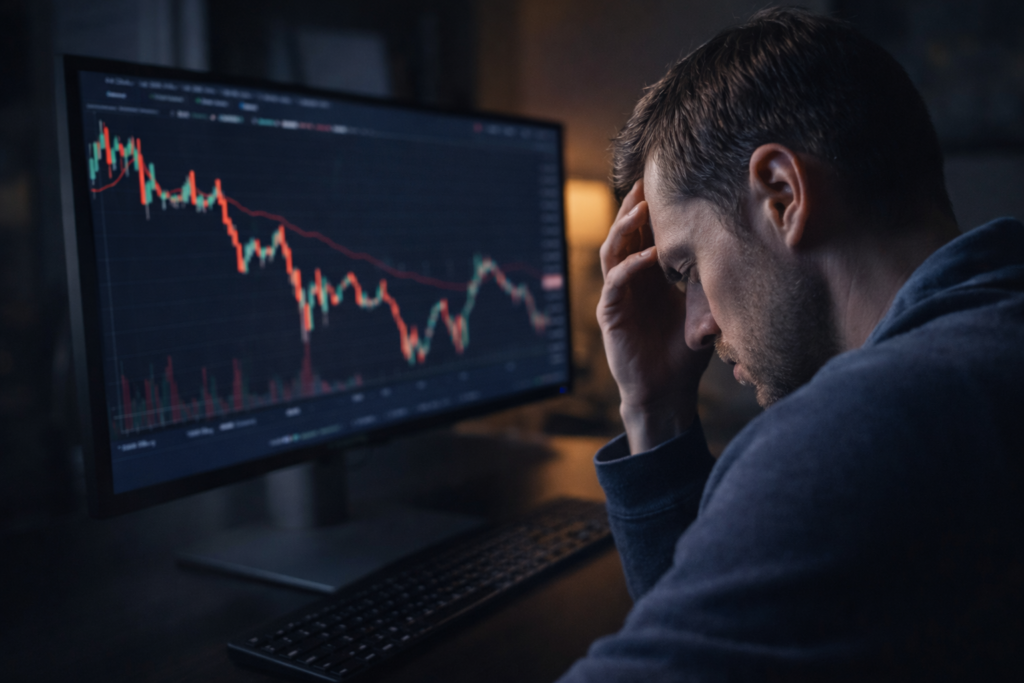
Investing is not only about numbers, charts, and choosing the right assets. It is also about behavior. Many beginners think the hardest part of investing is knowing what to buy, but very often the real challenge is knowing how to stay calm after you buy.
Markets move up and down. Prices change every day. News headlines can sound dramatic. Social media can make it seem like everyone else is making money faster than you. In that environment, emotions can easily take control.
Emotional investing happens when decisions are driven by fear, excitement, panic, impatience, or greed instead of a clear plan. It can lead beginners to buy too late, sell too early, chase trends, or abandon good strategies at the worst possible time.
The good news is that emotional decisions can be reduced. You do not need to become emotionless. You simply need a process that helps you slow down, think clearly, and avoid reacting impulsively.
In this guide, you will learn why emotional investing happens, what triggers it, and how beginners can build calmer investing habits.
Why Emotions Affect Investing So Much
Money is personal. That is why investing can feel emotional, especially when you are just starting.
When your investment goes up, you may feel excited and confident. When it goes down, you may feel worried or even regretful. These reactions are normal, but they can become dangerous if they control your decisions.
The problem is that markets rarely move in a smooth straight line. Even strong long-term investments can have bad days, weeks, or months. If every price movement changes your mood, investing quickly becomes stressful.
Beginners are especially vulnerable because they do not yet have much experience. A small drop can feel like a disaster. A sudden rise can feel like proof that you should invest more immediately. Without perspective, emotions can make normal market movement feel much bigger than it really is.
Understanding this is the first step. Emotional reactions are natural, but investment decisions should not be based only on how you feel in the moment.
Fear and FOMO Are the Main Triggers
Two of the strongest emotions in investing are fear and FOMO.
Fear usually appears when the market falls. A beginner sees their portfolio drop and starts thinking they need to sell before things get worse. This can lead to panic selling, which often locks in losses and turns a temporary decline into a permanent mistake.
FOMO means fear of missing out. It happens when an asset rises quickly and everyone seems to be talking about it. You may feel pressure to buy immediately because you do not want to miss the opportunity. The danger is that you may buy without understanding the investment or the risk.
Both fear and FOMO push investors to act quickly. That is the problem. Good investing usually benefits from patience, while emotional investing creates urgency.
When you feel rushed, that is often a warning sign. The more emotional the decision feels, the more important it is to slow down.
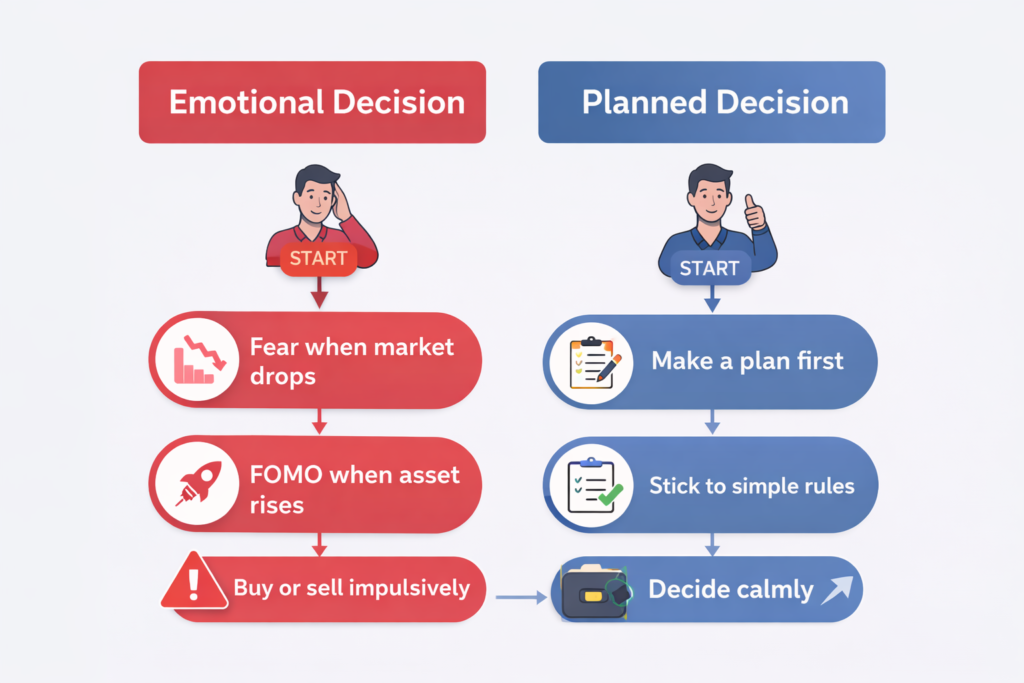
Create a Plan Before You Invest
One of the best ways to avoid emotional investing is to make decisions before emotions appear.
This means creating a simple plan before you invest. Your plan should answer basic questions: why are you investing, what are you buying, how long do you expect to hold it, and what would make you change your mind?
Without a plan, every market movement becomes a new decision. If prices fall, you wonder what to do. If prices rise, you wonder whether to buy more. This creates stress and makes emotional reactions more likely.
With a plan, you already have guidance. You are not trying to make decisions in the middle of panic or excitement. You are following rules you created when you were calmer.
A beginner plan does not need to be complicated. It just needs to be clear enough to help you avoid random decisions.
Avoid Checking Your Portfolio Too Often
Checking your portfolio constantly can make emotional investing worse.
The more often you look, the more short-term movement you see. Small changes start to feel important. A normal market dip may feel like a warning. A small gain may make you feel overconfident.
For long-term investors, daily checking is usually not necessary. It often creates more anxiety than useful information. If your strategy is based on months or years, watching every hour does not help much.
A better habit is to decide when you will review your investments. That might be once a week, once every two weeks, or once a month depending on your style. The key is to avoid turning investing into constant emotional monitoring.
Less checking can often lead to calmer decisions.
Do Not Invest Money You Need Soon
Emotional decisions become much more likely when you invest money you cannot afford to leave invested.
If you may need the money soon for rent, bills, emergencies, or important expenses, every market drop will feel more stressful. You will not be thinking calmly because the money is tied to immediate needs.
This is why beginners should avoid investing money they may need in the short term. Investing works better when the money can stay invested long enough to handle market ups and downs.
Having an emergency fund and basic financial stability can reduce emotional pressure. When your essential needs are covered, you are more likely to make rational decisions with your investments.
A calm financial foundation supports calm investing.
Be Careful With Social Media Hype
Social media can make emotional investing much worse.
You may see people posting huge gains, dramatic predictions, or confident opinions about what will happen next. This can create pressure, especially if you are new and still unsure of your own decisions.
The problem is that social media usually shows the most exciting parts, not the full picture. People often share wins more than losses. They may also promote risky ideas without explaining the downside.
Beginners should be careful not to treat social media excitement as research. A popular post is not the same as a solid investment reason.
Before buying anything because it is trending, ask yourself: would I still want this investment if nobody online was talking about it?
If the answer is no, emotion may be driving the decision.
Use Simple Rules to Slow Yourself Down
Simple rules can protect you from impulsive decisions.
For example, you might decide never to buy an investment the same day you first hear about it. You could wait 24 hours, research it, and then decide calmly. This helps reduce FOMO.
You might also create a rule that you do not sell during a market drop without reviewing your original reason for investing. This helps reduce panic selling.
Another useful rule is to write down why you are buying something before you buy it. If you cannot explain the reason clearly, you may not understand it well enough yet.
Rules like these are powerful because they create space between emotion and action. That space is where better decisions happen.
Accept That Market Drops Are Normal
Many emotional mistakes happen because beginners treat market drops as something unusual. In reality, declines are part of investing.
Markets do not rise every day. Even strong investments go through periods of weakness. A falling price does not automatically mean your strategy has failed.
This does not mean you should ignore every problem. Sometimes investments fall for serious reasons. But beginners should learn to separate normal volatility from real changes in the investment’s quality.
When you expect some ups and downs, they become less shocking. That makes it easier to stay calm.
Focus on the Long Term
Long-term thinking is one of the best defenses against emotional investing.
Short-term markets are noisy. Prices react to news, expectations, fear, and excitement. But long-term investing is about patience, consistency, and giving your strategy time to work.
When you focus too much on short-term movement, every change feels urgent. When you focus on the long term, daily movement becomes less important.
This mindset does not remove risk, but it helps you avoid overreacting. It reminds you that investing is not about winning every day. It is about making sensible decisions repeatedly over time.
For beginners, this shift is very important. A long-term mindset makes it easier to stay disciplined when emotions rise.
Conclusion
Emotional investing is one of the most common problems beginners face. Fear can make you sell too quickly. FOMO can make you buy too impulsively. Social media, market drops, and constant portfolio checking can all make these emotions stronger.
The solution is not to remove emotion completely. That is unrealistic. The solution is to build habits and rules that stop emotion from controlling your actions.
Create a plan before you invest. Avoid checking too often. Be careful with hype. Do not invest money you need soon. Use simple rules to slow down decisions. And remember that market movement is normal.
A calm investor is usually a better investor. The more you learn to manage your emotions, the stronger your investing decisions can become.